




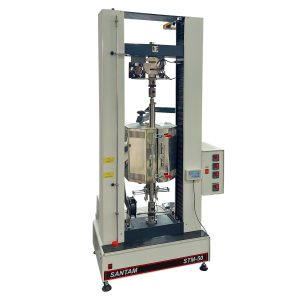
In relaxation test, a certain stress is applied to the specimen as per standard (normally 70% or 80% of the ultimate limit) and the sample elongation is controlled on a constant value. Then the decrease in force (to keep the specimen under the same conditions) is obtained over time. The results of this test are highly important in design of structures and bridges. The load capacity of SRT-400M ensures the relaxation test up to 40 tons load. The machine is controlled by means of an electronic hardware and a gear motor with which the specimen strain is kept constant. The load is applied by the corresponding mechanism with knife edge supports and dead weight. To calculate the exact strain as well as the specimen elongation, a special extensometer -10mm stroke, resolution 0.001mm and base length 700mm (can be increased up to 1000mm on the request)- can be used, in which linear encoder transducer or linear potentiometer sensor (accuracy 0.1% F.S with the least noise and temperature effects on communicating signals) or digital dial gauge is used. As a result, the load can be measured with 0.5% error and the specimen strain can be obtained with high accuracy. The machine has special clips for mounting the extensometer on PC wire specimens, d=3~9mm and d=9~20mm. Grips are of wedge type to clamp metal specimens with round and rectangular (bar and belt). To increase the machine capability, three sizes of wedges with different diameters can be mounted (d=3-8mm, d=07-18mm, d=17-28mm for testing three sizes of PC strands, diameters 0.6″, 1/2″, and 3/8″. It should be noted that the grip stroke is maximum 150mm, and the maximum distance for installing the specimen is 1000mm (manually adjusted).
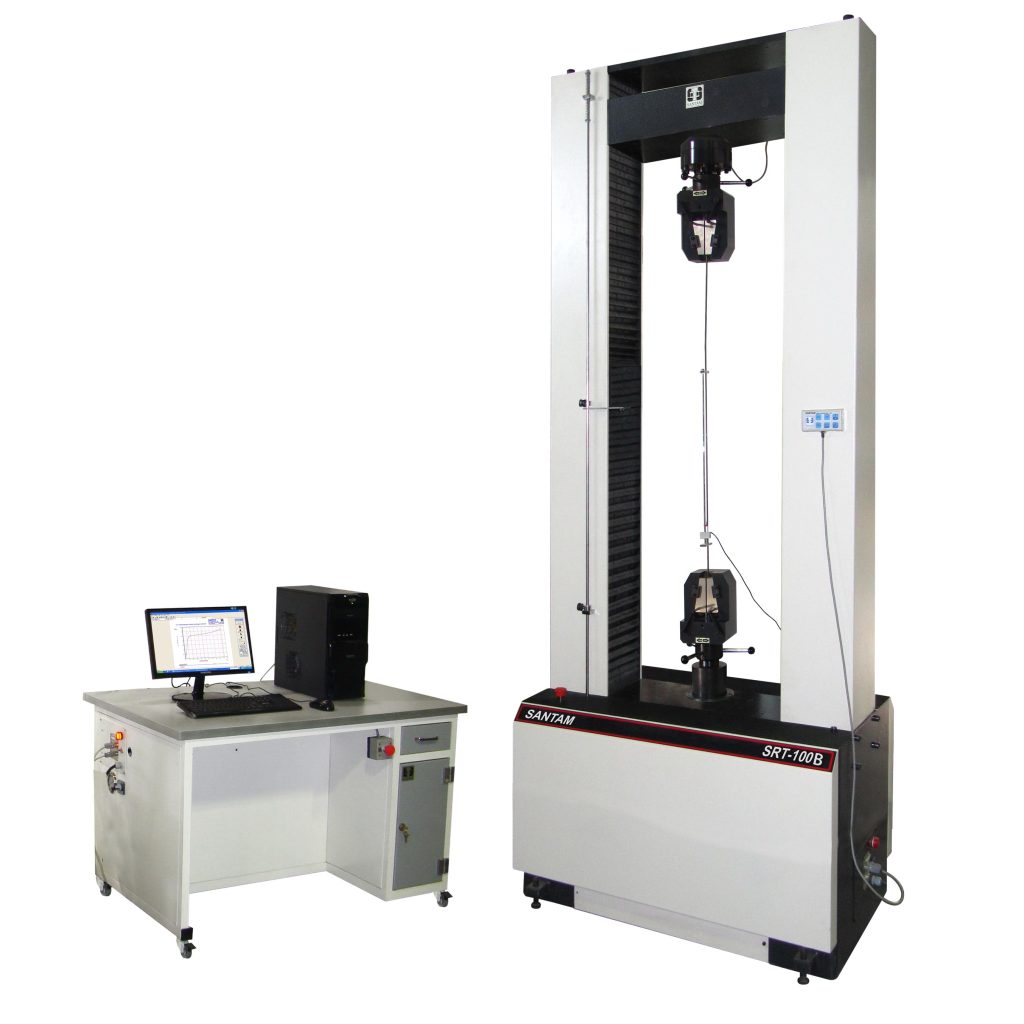


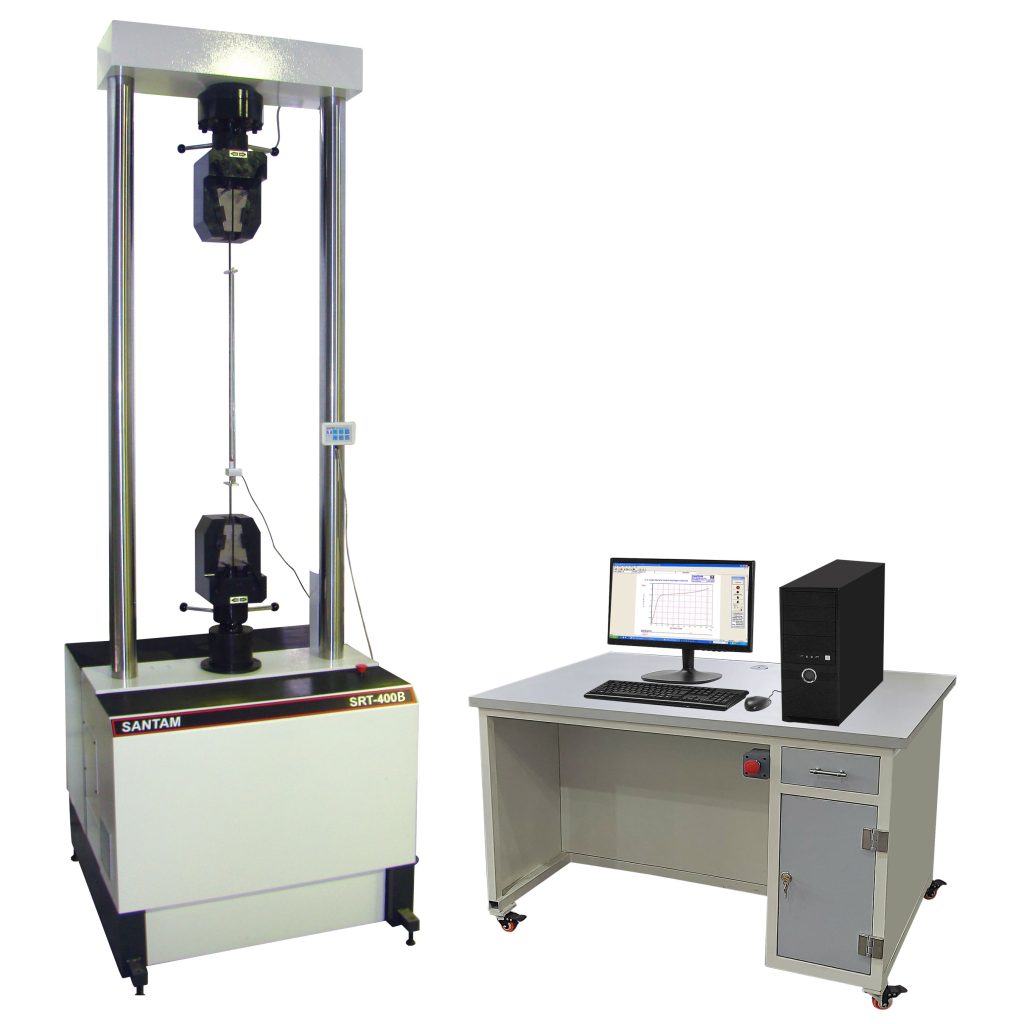

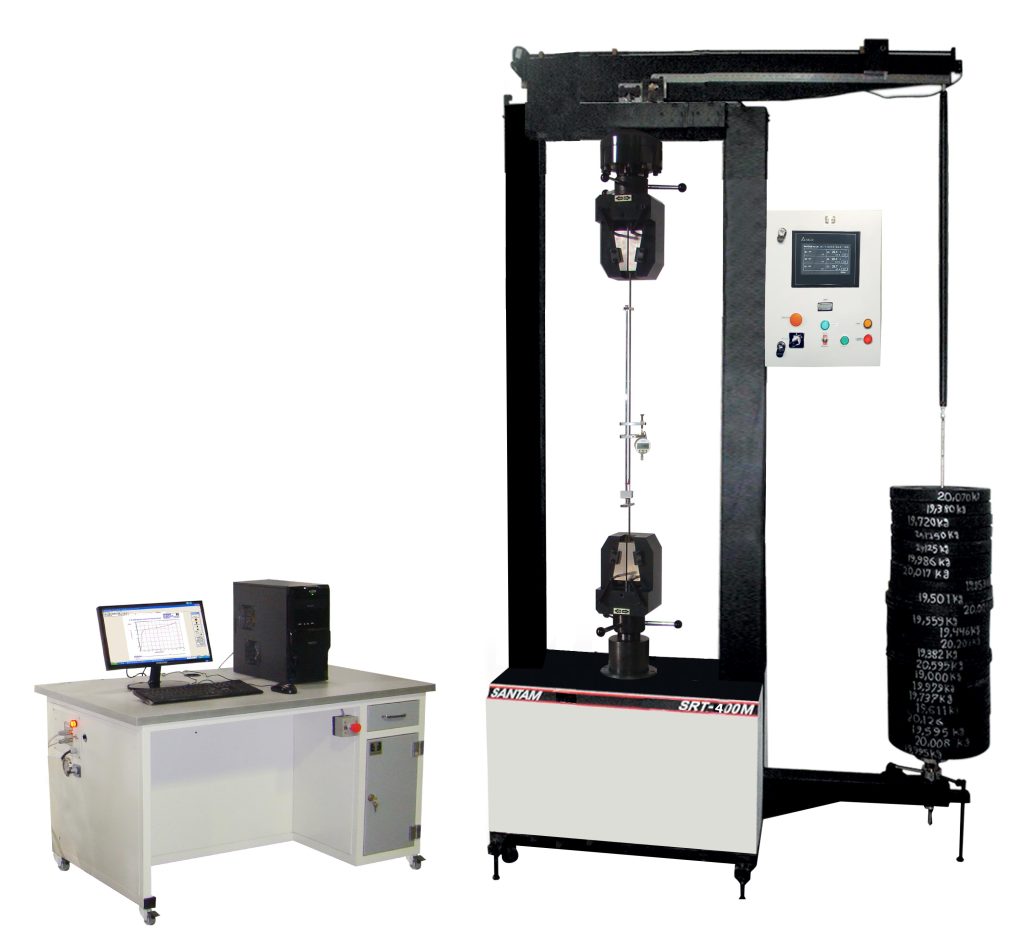
SRT-400M is intended to long term relaxation test for metals, special alloys, steel wires as well as pre-stressed PC wires and PC strands. The test results can be used in design and QC for concrete structures, bridges, suspension bridges, etc. at ambient temperature. Moreover, it can be used in different fields such as R&D, and QC of products such as:
•Testing and checking the PC wires
•Shielded or unshielded wires
•QC of strands
You must be logged in to post a review.

SRT-400M Catalog
In relaxation test, a certain stress is applied to the specimen as per standard (normally 70% or 80% of the ultimate limit) and the sample elongation is controlled on a constant value. Then the decrease in force (to keep the specimen under the same conditions) is obtained over time. The results of this test are highly important in design of structures and bridges. The load capacity of SRT-400M ensures the relaxation test up to 40 tons load. The machine is controlled by means of an electronic hardware and a gear motor with which the specimen strain is kept constant. The load is applied by the corresponding mechanism with knife edge supports and dead weight. To calculate the exact strain as well as the specimen elongation, a special extensometer -10mm stroke, resolution 0.001mm and base length 700mm (can be increased up to 1000mm on the request)- can be used, in which linear encoder transducer or linear potentiometer sensor (accuracy 0.1% F.S with the least noise and temperature effects on communicating signals) or digital dial gauge is used. As a result, the load can be measured with 0.5% error and the specimen strain can be obtained with high accuracy. The machine has special clips for mounting the extensometer on PC wire specimens, d=3~9mm and d=9~20mm. Grips are of wedge type to clamp metal specimens with round and rectangular (bar and belt). To increase the machine capability, three sizes of wedges with different diameters can be mounted (d=3-8mm, d=07-18mm, d=17-28mm for testing three sizes of PC strands, diameters 0.6″, 1/2″, and 3/8″. It should be noted that the grip stroke is maximum 150mm, and the maximum distance for installing the specimen is 1000mm (manually adjusted).








Reviews
There are no reviews yet.