



Purpose
Over the years, manufacturers worldwide have shifted from a primary focus on production volume toward an emphasis on product quality, and ultimately to systematic quality assurance. Any manufacturing company aiming to operate professionally must continuously strengthen its engineering and technical infrastructure in line with technological advancements.
In the past, production quality in factories relied heavily on the personal expertise and experience of owners or senior technicians. However, with the rapid development of scientific knowledge, modern manufacturing must follow state-of-the-art methods and standardized procedures. Established companies have no alternative but to modernize their production systems and upgrade their quality control processes in order to remain competitive. Without a properly equipped laboratory and a quality control (QC) department, even trial production becomes impractical.
Companies must have laboratories for two reasons: first, to enhance the scientific and engineering level of production; and second, to establish and maintain the company’s reputation as a successful and reliable brand. When a company adheres to applicable production standards, maintain full supervision over both design and manufacturing processes, and respects customer rights through assured product quality, it can sustain its credibility as a reputable brand. Such commitment and continuity ultimately ensure long-term market presence and global product acceptance.
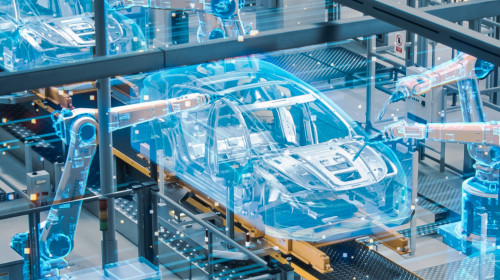
In a Production Entity, Quality Control is based on three policy principles

QC of Materials before Transferring to Warehouse
Producers had always been in quality troubles due to problems in quality of raw materials and diversity in supplied materials. For this purpose, the only way to control raw materials is making sure that raw materials are of proper quality and grade. Testing the raw materials before buying, leads to cost effectiveness, saving time, increasing the efficiency, reducing the troubles that may occur after buying the raw material, or finding proper suppliers.
Part Manufacturing Process Control (Full Supervision over Production in Different Processes)
There is no quality control during manufacturing some products, but for assembly manufacturers and some special products it is necessary to have quality supervision while producing; the reason is given below:
- Raw Material Control: to be assured of raw material conformity, the materials must be checked during the working day prior to consumption, finally QC department must daily provide the production section with the approval for utilizing the raw material (for each pack or cargo) to avoid transferring unreliable materials or those with unknown grade and diversity to production process. This control, as well as identifying the raw materials would be of great help in uniformity of production.
- Semi-Finished Quality Control: production process is too complicated or long in many production sections. To be assured of the quality in finished products, QC department must always have supervision over the products. Quality tests must be fulfilled in different steps in order to remove any probable problem in design, machinery, or labor abruptly. Control and supervision during production lead to improving work efficiency.
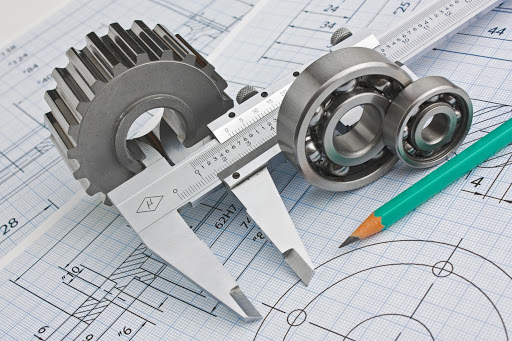

Final Quality Control of Finished Products (Test and Final Acceptance of Finished Products)
The last supervision over the product quality is "Final QC" of the product. In some cases, apart from adhering to production standards during manufacturing process, some other tests must be carried out on the finished products as well. Such tests must be proportional to the application of that product in that very special industry, these tests are commonly referred to as "Functional Tests". The part (specimen) is destructed during the test enabling us to get accurate data about the weakness and strength of materials or finished products. To increase the quality of finished products, most great companies conduct wide researches. Upon investigating potential problems, the product functionality is tested under different critical conditions to measure the functionality and durability of the product under defined conditions, thus the service life of the product is practically determined (e.g. for suspension components of a vehicle, static and dynamic mechanical tests can be defined with respect to the vehicle's different parameters and applied forces). Such quality controls are mainly internal and are carried out to increase the quality of component (both functionality and durability) that lead to customer's satisfaction.
Regarding the high costs of production and supply of raw materials, the three mentioned quality controls in a manufacturing unit facilitate the quality control process and minimize the risk of poor quality products or their return. Any QC department needs a laboratory quite proportional to productions, specialized tools and machinery. The companies that looking for equipping their laboratory are of two types:
- Centers at which a product is designed as per certain standards and analyzed by engineering software, and then the whole production process is performed in accordance with standards, would face with no specific problem, only the test methods must be fulfilled as per standards and requirements. In this type of production, quality inspection and uniformity in production are significantly important. In some parts of the production process or supplying the raw material or even tailor-made production, if they face with modification of parameters they can remove the problem easily because the design and production principles are strictly adhered to
- However, those centers at which the production process is somehow traditional, they face with two problems to increasing their quality. First, lack of precise information about the product design; and second, lack of knowledge of material analysis. In such centers, qualified products may be produced but the producer should check the test methods intermittently comparing with products of certain quality. It must be noted that, having a laboratory and Quality Control cannot remove all problems; manufacturers must improve their engineering infrastructure in the long term and establish R&D department to solve the problems in a principled way enabling the designer get assured of the product and design quality throughout the production process.
Other Topics to be Discussed in the Future
- Why do manufacturing units have different qualities?
- Why do managing directors consider it an additional cost to buy lab equipment?
- What are the things you need to consider when purchasing materials for a laboratory?
- Basic principles of equipping a laboratory
- Customer's problems in selecting and buying equipment
- Quality of purchased equipment
- After sales service and support for lab equipment

